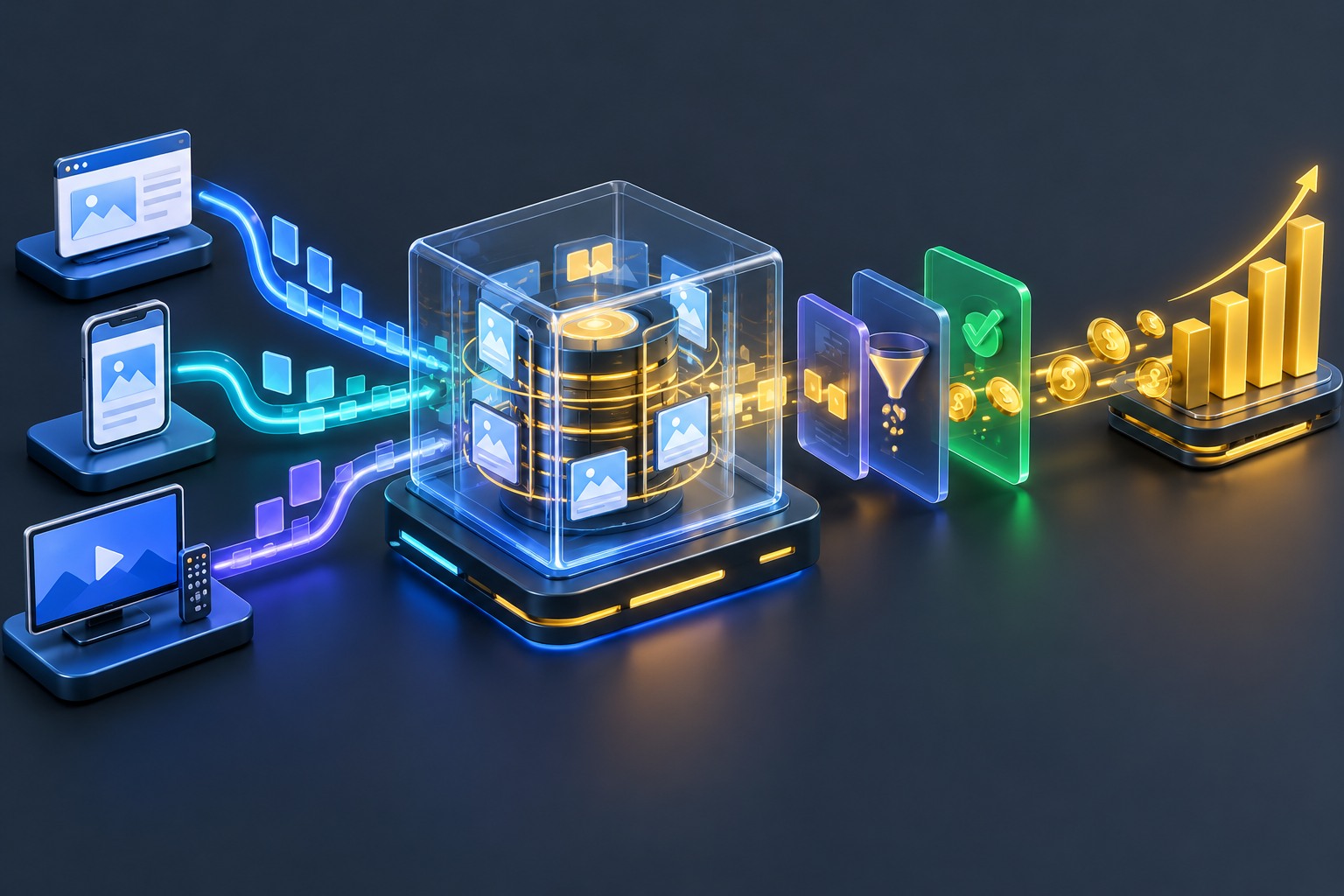
Campaign data is the information created and collected during digital advertising campaigns to assess performance and provide insight. It matters because without data, all creative campaigns are just guesswork rather than results.
As advertising ecosystems continue to grow in complexity, advertisers need structured ways to collect and understand campaign data across channels. From display campaign data to retargeting campaign data to video campaign data, this guide explains what campaign data is, why it matters, and how Gamoshi helps teams act on data.
What Is Campaign Data and Why Does It Matter
The term ‘campaign data’ refers to all measurable signals generated during an advertising campaign. Such signals indicate how audiences react to advertisements and where areas of improvement may lie. Some of the most common data points to be derived from it are:
- Impressions and reach,
- Click-through rates,
- Conversions and post-click actions
- As well as frequency and engagement.
When organised properly, this type of data can determine the potential for growth.
Display Campaign Performance Through Data
A display campaign generates large volumes of impressions that must be evaluated beyond surface level metrics.
Effective display campaign analysis focuses on:
- Viewability and placement quality.
- Audience relevance
- Conversion assisted performance.
Campaign data helps identify which placements deliver real value rather than just visibility.
Retargeting Campaign Insights That Convert
Precise data signals are the lifeblood of a retargeting campaign. Error on even one of these signals and retargeting suffers badly.
Not surprisingly, those key signals include:
- Recency of user interaction
- Frequency caps
- Cross device behavior
Campaign data ensures that retargeting is kept relevant, and conversion-focused.
Video Campaign Measurement Beyond Views
A video campaign produces engagement signals that go deeper than views alone.
Meaningful video campaign metrics include:
- Completion rates
- Time watched
- Interaction events
- Post view conversions
Analyzing campaign data at this level reveals true audience intent.
A Clear Framework for Interpreting Campaign Data Across Channels
Campaign Type | Key Data Focus | Primary Optimization Goal |
Display campaign | Reach and viewability | Efficient awareness |
Retargeting campaign | Frequency and recency | Conversion lift |
Video campaign | Completion and engagement | Brand impact |
Cross channel | Attribution paths | Budget efficiency |
Why a Campaign Management Platform Matters
Campaign management systems unite the gathering, implementation, and optimization of data in one system.
Advantages of such systems comprise:
- Integrated reporting across platforms.
- Use of real-time performance.
- Quick optimization processes.
The absence of a campaign management platform will result in inefficient use of the obtained campaign data.
How Gamoshi Helps Teams Act on Campaign Data
People in advertising can gain something with Gamoshi’s innovative service that allows for easy organization, analysis, and implementation of advertising campaigns.
The services are the following:
- It gives an immediate view of the advertising campaign.
- Insights obtained from channel data across various platforms.
- Tools for scaling up the optimization efforts.
Using these services can help advertisers and publishers achieve results with the help of data.
Common Campaign Data Mistakes to Avoid
Even data rich campaigns can fail if data is misused.
Common mistakes include:
- Focusing on vanity metrics.
- Ignoring attribution complexity.
- Delaying optimization decisions.
Strong campaign management requires both data and discipline.
Frequently Asked Questions
1. What is brought out by the phrase “campaign data”?
The phrase characterizes the information, which is derived from a marketing effort.
2. What is the importance of campaign data?
Campaign data is important because it enables one to measure, assess, and fine-tune decisions related to the marketing effort.
3. How can campaign data be helpful in retargeting campaigns?
Campaign data assists in increasing efficiency, timing, and frequency of marketing campaigns.