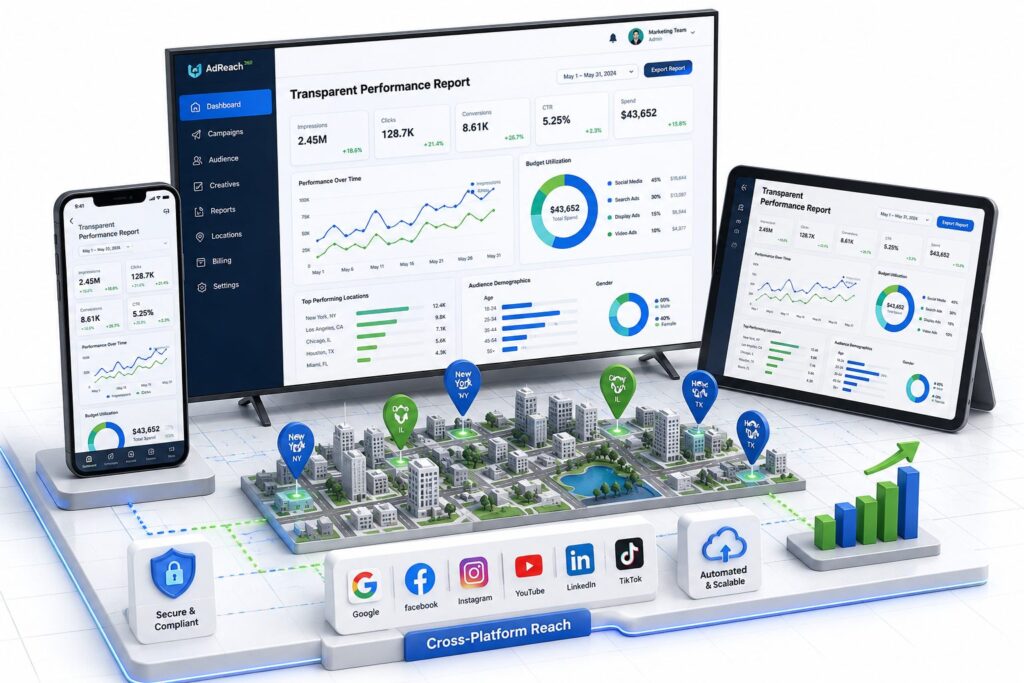
Streaming has completely rewritten the rules of TV advertising. As more viewers ditch cable for on-demand platforms, programmatic connected TV has become one of the sharpest tools brands have for reaching audiences and actually knowing whether the money spent is working. What today’s marketers need isn’t just more ad inventory; it’s a way to tie viewer data, automated buying, and real performance optimization together into something coherent. That’s the gap Gamoshi has built its platform around, positioning itself as one of the more data-driven players in the space. Through real-time bidding, deeper audience segmentation, and continuous data analysis, Gamoshi helps advertisers get more out of every connected TV dollar than they typically would through traditional broadcast buys.
What Programmatic Connected TV Actually Means
Programmatic advertising on connected televisions mainly has to do with how advertisers can automatically buy and sell ad space on the connected TV without any guesswork. Instead of relying on demographic information to make estimations about the kind of people watching a given ad on network television, advertisers through the traditional approach can now make use of the real data available as a result of their customers’ online behaviour and interests.
The way this works is by following the following steps:
- Gathering audience data
- Automatically purchasing advertising space in real time
- Making continuous adjustments and improvements in the process of the campaigns
- Monitoring viewership on different devices
- Conveying results from the ad campaign to optimise the process of the following campaigns.
What Sets Gamoshi Apart
A few things tend to come up when people describe why Gamoshi stands out from other CTV vendors:
- More accurate audience targeting
- Deeper automation across the campaign lifecycle
- Solid, transparent reporting infrastructure
- Market-level optimization
- Campaigns that scale without breaking down
- Decision-making backed by real data, not guesswork
For advertisers who care about outcomes not just getting ads in front of eyeballs that combination is a big part of the appeal.
How Gamoshi Stacks Up
| Feature | Gamoshi | Typical CTV Vendor | Basic Ad Network |
| Programmatic CTV Capabilities | Advanced | Moderate | Limited |
| Audience Targeting Precision | High | Medium | Low |
| Real-Time Optimization | Yes | Partial | Limited |
| Programmatic Campaign Management | Comprehensive | Basic | Minimal |
| Geographic Targeting | Highly Granular | Standard | Broad |
| Reporting Transparency | Extensive | Moderate | Limited |
| Cross-Platform Reach | Extensive | Moderate | Limited |
| Automation Technology | Advanced, AI-Driven | Standard | Basic |
| Platform Functionality | Enterprise-Level | Mid-Level | Entry-Level |
| Customer Support | Dedicated Strategic Support | Standard Support | General Support |
| Campaign Scalability | High | Medium | Low |
| Performance Insights | Deep Analytics | Basic Analytics | Limited Reporting |
Frequently Asked Questions
1. What is connected TV advertising?
It’s the automated buying and optimizing of ads on internet-connected TV devices smart TVs, streaming boxes, that kind of thing. The goal is simple: get the right ad in front of the right viewer without a human manually placing every buy.
2. Why is programmatic CTV advertising growing so fast?
Because that’s where people actually are now. Traditional TV viewership keeps shrinking as more households shift to streaming, and advertisers naturally want to follow their audience especially since streaming platforms make it much easier to measure whether a campaign is actually working.
3. What makes a connected TV platform good?
A few things matter most: precise targeting, real automation, clear reporting, broad access to inventory, and tools that actually help campaigns improve over time. The best platforms bring all of that together in one place instead of forcing marketers to juggle multiple systems.