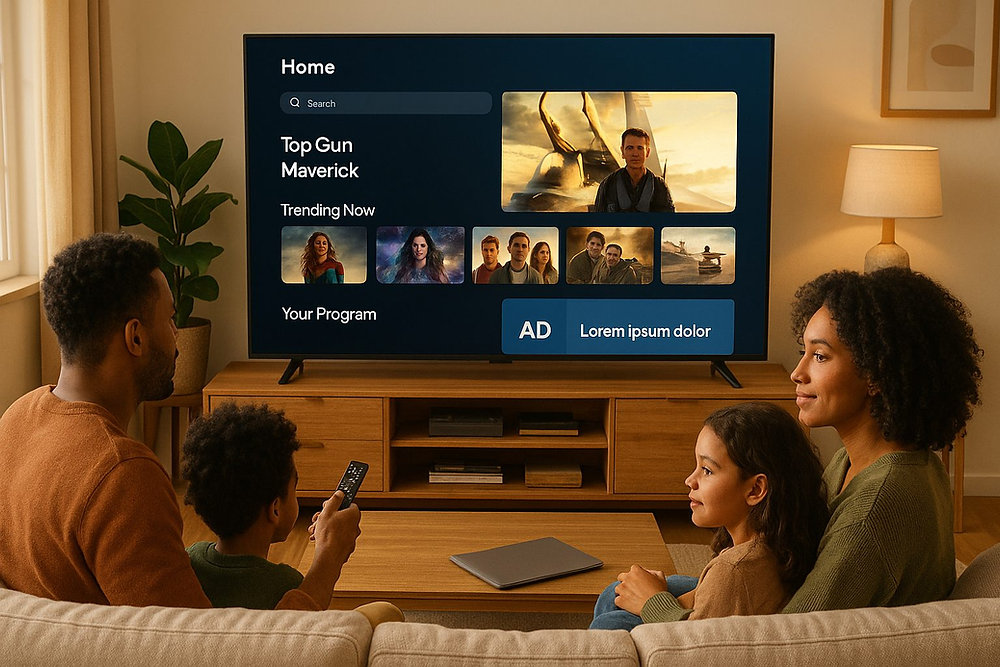
Connected TV has quietly become the default way a lot of people watch content now, with viewers steadily shifting away from cable toward streaming. Advertisers are doing the thing. But there is a problem: putting ads on all these streaming services by hand is not a good way to do things. It is a waste of time. That is where Connected TV programmatic comes in. It is a way to use data and computers to place ads. This makes it easier for advertisers to reach people who are watching Connected TV. At Gamoshi, we are not just watching these changes happen. We are making them happen. We are a part of the change to connected TV.
Let us be honest not all CTV ad platforms are the same. So what makes Gamoshi different from CTV ad platforms like Gamoshi?
- You can connect with names like Hulu, Roku, Samsung TV Plus and many more with the help of Gamoshi.
- Gamoshi is secure because Gamoshi has built-in fraud detection and brand safety features to protect your ads on Gamoshi.
- Gamoshi has auction technology that helps you get the best results from your ads on Gamoshi.
Gamoshi gives you access to a range of ads whether you are launching a campaign or introducing a new product in a specific region, with the help of Gamoshi.
Transparent Reporting & Measurement
Your ad dollars deserve better than to remain in the dark. With Gamoshi, users receive transparent, rich analytics dashboards. Track:
- View-through rates (VTR)
- Completion rates
- Device-level engagement
- Frequency and reach
- Creative performance insights
With every campaign, you’ll understand exactly what’s working, where to optimize, and how to stretch your marketing budget further.
Programmatic CTV Advertising vs. Traditional TV Buys
| Feature | Traditional TV | Programmatic CTV |
| Targeting | Demographic-based | Behavioral & contextual |
| Buying Method | Manual | Automated (real-time) |
| Ad Measurement | Post-campaign | Real-time |
| Ad Skipping | Often possible | Often non-skippable |
| Cost Efficiency | Higher CPM | Lower cost per outcome |
| Geo-Targeting | Limited | Highly specific |
| Creative Flexibility | Low | High |
Key Challenges and How Gamoshi Solves Them
Even with all these advantages, programmatic CTV comes with its setbacks. These include the following:
- Fragmented Ecosystem: There are far too many platforms and varying standards, which confuse the advertiser. Gamoshi seeks to address this from a centralized point of access to multiple CTV inventories and harmonized data protocols.
- Latency issues: Some are facing problems of real-time bidding lag. Gamoshi means edge computing; the larger meaning is no-lag ad rendering and faster delivery of rendered ads.
- Ad Fraud: CTV scam indeed. Gamoshi paints with many verification strokes and AI detection methods to ensure the most genuine of impressions, eradicating bots and imitated devices.
- Creative Relevance: All good ads, except the targeting, are rubbish. Gamoshi uses contextual metadata as relevance and allows creatives to connect.
Future Trends: Where Programmatic CTV is Headed
Programmatic CTV is going to use something called machine learning to make predictions about what people want to watch. This is called AI-Augmented Targeting. It will help figure out what people want to see on television. Programmatic CTV will have Interactive CTV Ads where people can click on things they like and buy them right away on their smart TVs. Programmatic CTV will also be able to see what people do on their desktop or mobile devices after they watch something on television. This is called cross-device attribution, and it will help people understand what people do after they watch something on programmatic CTV. Programmatic CTV will also start to think about the earth and try to reduce waste. These are called sustainability metrics. It will help companies be kind to the earth. Gamoshi is working on these ideas so that their customers can be ahead of everyone else. Gamoshi is investing in programmatic CTV to make sure their customers have the tools to use.
Why CTV Programmatic Deserves Your Attention—Now
Programmatic CTV is not just another tech trend—it’s a strategic necessity. With changing viewer behavior, one-size-fits-all TV approaches no longer work. Solutions such as Gamoshi are developing the infrastructure that enables advertisers to make the transition with confidence.
It isn’t about boarding a bandwagon. Whether you are a global conglomerate or an agile startup, CTV programmatic provides a competitive advantage that traditional media can only dream of.
FAQs
1. I want to know if I can choose where my ads appear on CTV.
Of course I can. The Gamoshi platform gives me the ability to select which publishers I want to work with on CTV pick categories on CTV and use filters on CTV to keep my ads from content on CTV that is not suitable for my ads on CTV.
2. What kind of return on investment can I expect from my CTV campaigns?
The return on investment for my CTV campaigns will be different depending on the type of industry I’m in. It also depends on how my ads on CTV are created. Usually, brands see a return on investment that’s 2 to 5 times higher than what they get from traditional formats. This is because people pay attention to CTV ads on CTV, and my ads on CTV are shown to real people.
3. How does Gamoshi make sure it is following the rules to keep my data private on CTV?
Gamoshi follows the rules, like the GDPR and the CCPA, for CTV. Gamoshi keeps user information. It also gives advertisers the tools they need to control what information is shared and to be transparent about what they’re doing on CTV.
4. Why is CTV different from OTT?
CTV is different from OTT because OTT is a way to deliver content over the internet. CTV, on the other hand, is a way to show ads on TVs using computers and data to make sure the ads are shown to the right people. This makes CTV a unique way to buy and sell ads on TVs.